
 Fundraising Commons Team 3 min read
 Before the year-end rush: the data checklist that protects your campaign numbers
About the Author
The open, vendor-neutral commons behind the Advancement Common Data Model (ACDM™) and its free educational resources. We write about trustworthy advancement data, portability, and AI-readiness for fundraising teams of any size. Stewards are credited in the colophon, never in the byline.
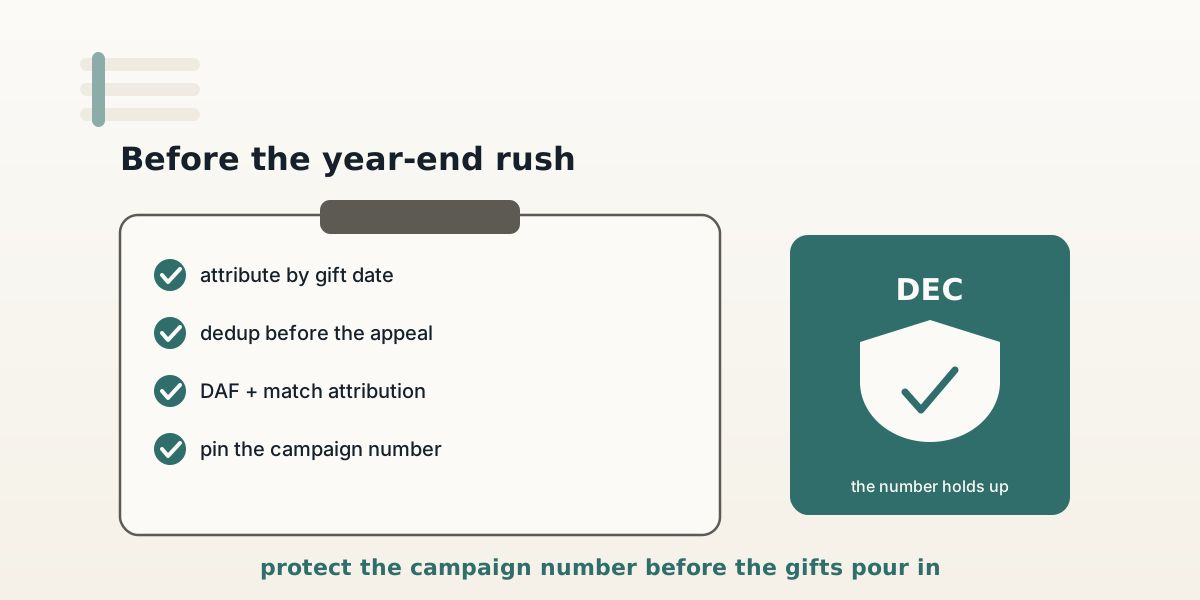
Year-end is when your data gets stress-tested in public. Gifts pour in across the fiscal boundary, DAF grants and matches surge, and duplicates pile up under the volume. The number you report to the board is only as trustworthy as the hygiene underneath it. Run a short checklist before the rush and you get a campaign number you can defend, instead of one you spend January reconciling.
How do I prep donor data for year-end giving?
Five checks, none of which require new software. Just decisions made and written down before the gifts arrive. Do them now, while you still can; in late December there’s no time to fix definitions, only to live with them.
The year-end data checklist
1. Lock your attribution date to gift date
Year-end is exactly when this bites: a December 30 check keyed January 3 belongs to this campaign, but only if you attribute by gift date. Confirm every revenue and campaign report keys off gift date, not entry or batch date, or December will look soft and January artificially strong. (Full explanation: gift date vs. entry date vs. batch date.)
2. Deduplicate before the appeal goes out
Duplicates do double damage at year-end: the same donor gets asked twice (and notices), and your results double-count them. A dedup pass before the send protects both the donor experience and the count.
3. Decide DAF and matching-gift attribution up front
DAF grants spike at year-end. Decide now that the sponsor is the legal donor (hard credit), that the individual gets soft credit, and that a match is its own gift, so the surge doesn’t quietly inflate or misattribute your total. (See DAF gifts: who’s the legal donor and soft credit vs. hard credit.)
4. Pin the campaign number’s definition
Write down, before launch, exactly what “raised” means for this campaign: which gift types count, whether pledges count as raised or only payments, which date governs, and what the goal is measured against. A number everyone agreed to in November can’t be re-litigated in January.
5. Agree who runs the report, and from what definition
The fastest way to a board dispute is two staff reporting two “final” numbers. One agreed definition, one source, one number. (This is the why your reports disagree problem, and year-end is its highest-stakes moment.)
Run it before, not during
Every item on this list is cheap in November and expensive in January. The rush doesn’t create these problems. It reveals the ones you didn’t settle in advance. An hour of definitions now buys you a clean number and a quiet new year.
Why it matters more at year-end than any other time
Year-end doesn’t break your data. It exposes, at the worst possible moment and in front of the board, every definition you never wrote down.
The volume, the fiscal boundary, and the DAF-and-match surge all hit at once, so small, ignorable hygiene gaps become visible, expensive errors precisely when the stakes and the audience are highest. The shops that sail through aren’t luckier; they settled the definitions in the quiet weeks before.
What you get
A campaign number you can put in front of the board on January 2 without an asterisk, a donor experience that doesn’t double-ask your best supporters, and a fiscal total that reconciles the first time. The work is small and the timing is everything. Do it before the rush.
See What Becomes Possible for the bigger picture, or take the free self-assessment to find your weakest link before year-end.
Examples use synthetic data. The standard is open and early; treat current releases as drafts.
Related Articles
The board-meeting number: campaign reporting that survives scrutiny
The single campaign figure you present to the board survives scrutiny only if you decided in advance what counts: pledges, which date, deduped, one source. Here's how.
Why the fundraising sector can't learn from itself, and what a commons would change
Nonprofits can't benchmark against each other because data is trapped twice over and comparing has meant exposing donors. A commons changes both. Here's the whole argument.
From hunch to score: prioritizing a gift officer's week with data
How do you prioritize a gift officer's portfolio? Replace gut feel with a transparent score built on clean, connected data, so the week's calls have a defensible order.